Reviewed by Dr. Alan Baughman, DMD, MBA
Reading time: two minutes
A water flosser uses a pressurized stream of water to remove plaque, bacteria, and food particles from between teeth and along the gum line. When used with proper technique, a water flosser can significantly improve gum health and help reduce inflammation.
How to Use a Water Flosser: Step-by-Step Instructions
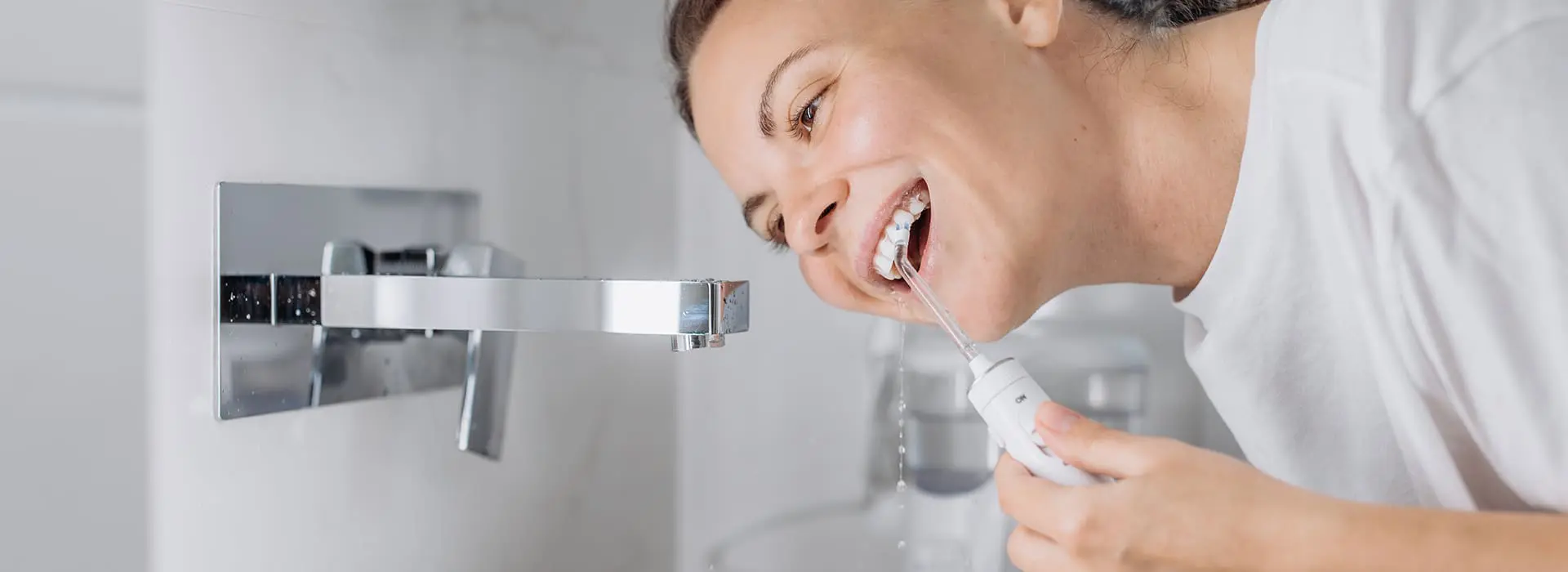
A water flosser should be aimed at the gumline and moved slowly along each tooth, pausing between teeth to flush out plaque and debris. A consistent routine improves plaque removal over time.
Follow these steps:
- Fill the water reservoir with lukewarm water. Warm water may be more comfortable for the gums.
- Choose the right pressure setting. Start on low pressure, especially if you are new to water flossing.
- Lean over the sink. This prevents water from splashing while you clean.
- Place the flosser tip in your mouth before turning it on. This helps control the flow and reduces mess.
- Aim at the gumline. Keep the tip angled toward where the tooth meets the gums.
- Follow the gumline and move tooth by tooth. Pause briefly between each tooth to allow the water to flush debris.
- Empty and clean the device after use.
This process typically takes about one to two minutes.
Common Mistakes to Avoid
Incorrect use can reduce effectiveness and lead to frustration.
- Using too much pressure too quickly
- Moving too fast across the teeth
- Skipping the back teeth
- Not aiming directly at the gumline
- Using it inconsistently
Slow, controlled movement allows better plaque removal.
Water Flosser vs. Floss: Which is More Effective?
Water flossers help flush plaque, bacteria, and debris from along the gumline and between teeth. Traditional floss removes plaque directly from the surface of each tooth.
Many patients benefit from using both. A water flosser improves access to hard-to-reach areas, while floss provides direct contact with the tooth surface.
Oral Hygiene Guidance at Clearwater Dentistry
Maintaining healthy gums starts with consistent plaque removal and regular professional care. During routine exams and cleanings, patients receive guidance based on their gum health, areas of buildup, and overall oral condition.
If you would like some advice on improving your oral hygiene routine or getting more out of your daily care, talk to us about it at your next checkup.
Dentist in Greeley, CO
To book an appointment at our dental office in Greeley, CO, call (970) 515-3550 or visit us at 3110 67th Ave Pl, Greeley, CO.
FAQs
A water flosser can be very effective at reducing plaque and improving gum health. Traditional floss physically scrapes plaque from tooth surfaces, so many patients benefit from using both.
Most patients should use a water flosser once per day as part of their oral hygiene routine.
Either order works. Many patients prefer using it before brushing to help remove debris so toothpaste can reach between teeth.
When used correctly on an appropriate pressure setting, a water flosser should not damage the gums. Starting on a low setting and using proper technique helps prevent irritation.