Published:

Does Biting Your Nails Damage Your Teeth?

Home » Blog » Does Biting Your Nails Damage Your Teeth?

Reviewed by Dr. Alan Baughman, DMD, MBA

Reading time: 3 minutes

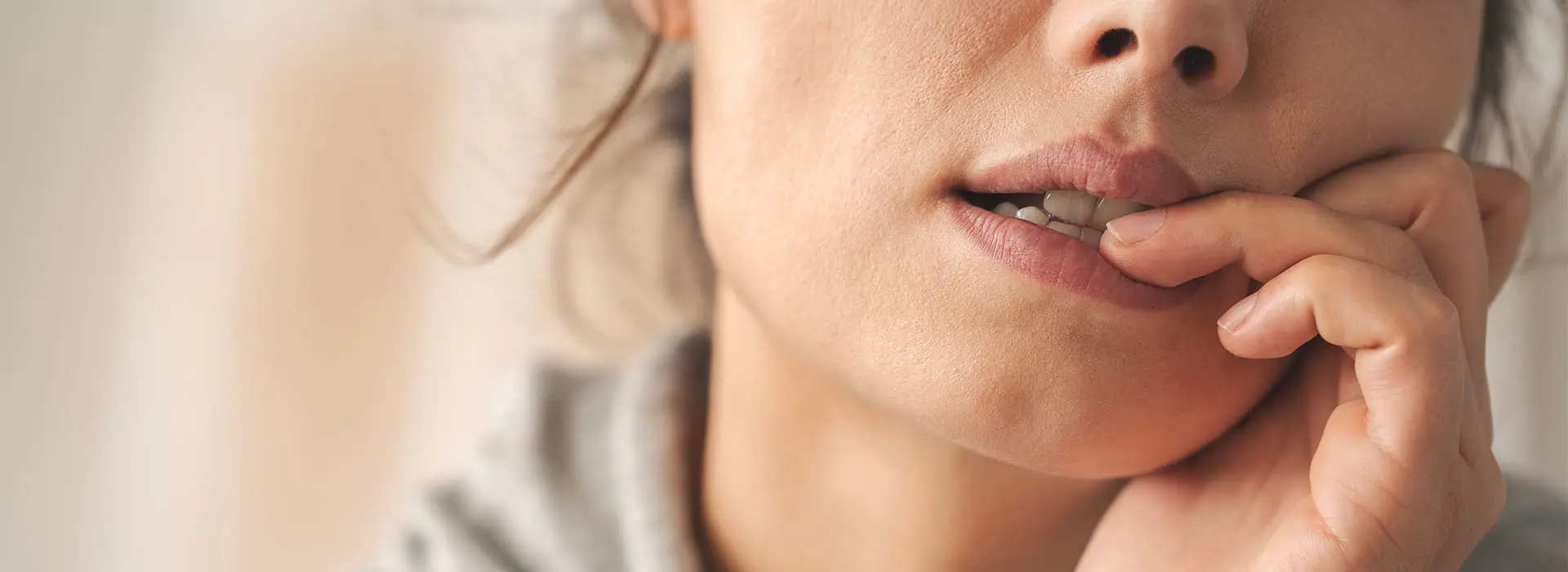
Nail biting may seem like a harmless habit, but your teeth are not made to bite hard fingernails over and over. Over time, that repeated pressure can chip enamel, wear down tooth edges, irritate the jaw, and damage fillings or other dental work.

How Nail Biting Can Damage Teeth

Biting your nails puts concentrated pressure on the front teeth. A single bite may not cause obvious damage, but repeated nail biting can slowly wear or weaken the edges of the teeth.

Nail biting may contribute to:

  • Small chips along the front teeth
  • Thin or uneven tooth edges
  • Enamel wear
  • Cracks or craze lines becoming more noticeable
  • Tooth sensitivity
  • Damage to bonding, veneers, crowns, or fillings
  • Jaw soreness from repeated clenching pressure
  • Gum irritation or inflammation from bacteria beneath the fingernails

If your teeth already have enamel wear, old fillings, bonding, or small cracks, nail biting can make damage more likely.

How to Stop Biting Your Nails

Stopping nail biting is easier when you know when and why it happens. Some people bite when they feel stressed. Others do it while reading, working, driving, or watching TV without realizing it.

Helpful steps include:

  • Keep nails trimmed short
  • Use a bitter-tasting nail coating
  • Wear a bandage or cover on the nail you bite most often
  • Replace the habit with a stress ball, fidget tool, or sugar-free gum
  • Notice your triggers, such as stress, boredom, or screen time
  • Ask someone close to you to gently point it out when you do it
  • Treat one finger at a time if stopping all at once feels difficult

Chronic nail biting can sometimes be part of a body-focused repetitive behavior, and extra support may make stopping more realistic.

Protecting Teeth While You Break the Habit

While you work on stopping nail biting, a dental visit can help check whether the habit has already caused damage. Dr. Baughman can look for chips, enamel wear, cracked teeth, damaged restorations, bite issues, and signs of grinding or clenching.

Depending on what we find, care may include smoothing a small rough edge, dental bonding for minor chips, or repairing dental work that has been damaged by repeated nail biting.

Schedule a Dental Exam in Greeley, CO

If you have noticed a chipped or rough tooth, sensitivity, or changes to the edges of your teeth from nail biting, schedule a dental exam. Dr. Baughman can evaluate your teeth and determine whether any areas need treatment.

To book an appointment at our dental office in Greeley, CO, call (970) 515-3550 or visit us at 3110 67th Ave Pl, Greeley, CO 80634.

FAQs

Can nail biting make teeth sensitive?

Nail biting may wear enamel or create small chips that expose more sensitive areas of the tooth. Sensitivity can also happen if nail biting adds pressure to teeth that are already stressed from clenching or grinding.

Can biting your nails move your teeth?

Nail biting is more likely to chip or wear teeth than move them, but repeated pressure may contribute to tooth or bite problems in some people. If teeth seem to be shifting, schedule a dental exam.

Can a dentist tell if you bite your nails?

We may notice signs such as small chips, uneven front tooth edges, worn enamel, damaged restorations, or jaw muscle soreness. These signs do not prove nail biting by themselves, but they can help start the right conversation.

How do I protect my teeth if I bite my nails?

Keep nails short, use a bitter nail coating, identify triggers, and schedule a dental exam if you notice chips, sensitivity, or jaw soreness. If you also grind or clench, a custom night guard may help protect your teeth while you sleep.
Does Biting Your Nails Damage Your Teeth?

Reviewed by Dr. Alan Baughman, DMD, MBA

Reading time: 3 minutes

Nail biting may seem like a harmless habit, but your teeth are not made to bite hard fingernails over and over. Over time, that repeated pressure can chip enamel, wear down tooth edges, irritate the jaw, and damage fillings or other dental work.

How Nail Biting Can Damage Teeth

Biting your nails puts concentrated pressure on the front teeth. A single bite may not cause obvious damage, but repeated nail biting can slowly wear or weaken the edges of the teeth.

Nail biting may contribute to:

  • Small chips along the front teeth
  • Thin or uneven tooth edges
  • Enamel wear
  • Cracks or craze lines becoming more noticeable
  • Tooth sensitivity
  • Damage to bonding, veneers, crowns, or fillings
  • Jaw soreness from repeated clenching pressure
  • Gum irritation or inflammation from bacteria beneath the fingernails

If your teeth already have enamel wear, old fillings, bonding, or small cracks, nail biting can make damage more likely.

How to Stop Biting Your Nails

Stopping nail biting is easier when you know when and why it happens. Some people bite when they feel stressed. Others do it while reading, working, driving, or watching TV without realizing it.

Helpful steps include:

  • Keep nails trimmed short
  • Use a bitter-tasting nail coating
  • Wear a bandage or cover on the nail you bite most often
  • Replace the habit with a stress ball, fidget tool, or sugar-free gum
  • Notice your triggers, such as stress, boredom, or screen time
  • Ask someone close to you to gently point it out when you do it
  • Treat one finger at a time if stopping all at once feels difficult

Chronic nail biting can sometimes be part of a body-focused repetitive behavior, and extra support may make stopping more realistic.

Protecting Teeth While You Break the Habit

While you work on stopping nail biting, a dental visit can help check whether the habit has already caused damage. Dr. Baughman can look for chips, enamel wear, cracked teeth, damaged restorations, bite issues, and signs of grinding or clenching.

Depending on what we find, care may include smoothing a small rough edge, dental bonding for minor chips, or repairing dental work that has been damaged by repeated nail biting.

Schedule a Dental Exam in Greeley, CO

If you have noticed a chipped or rough tooth, sensitivity, or changes to the edges of your teeth from nail biting, schedule a dental exam. Dr. Baughman can evaluate your teeth and determine whether any areas need treatment.

To book an appointment at our dental office in Greeley, CO, call (970) 515-3550 or visit us at 3110 67th Ave Pl, Greeley, CO 80634.

FAQs

Can nail biting make teeth sensitive?

Nail biting may wear enamel or create small chips that expose more sensitive areas of the tooth. Sensitivity can also happen if nail biting adds pressure to teeth that are already stressed from clenching or grinding.

Can biting your nails move your teeth?

Nail biting is more likely to chip or wear teeth than move them, but repeated pressure may contribute to tooth or bite problems in some people. If teeth seem to be shifting, schedule a dental exam.

Can a dentist tell if you bite your nails?

We may notice signs such as small chips, uneven front tooth edges, worn enamel, damaged restorations, or jaw muscle soreness. These signs do not prove nail biting by themselves, but they can help start the right conversation.

How do I protect my teeth if I bite my nails?

Keep nails short, use a bitter nail coating, identify triggers, and schedule a dental exam if you notice chips, sensitivity, or jaw soreness. If you also grind or clench, a custom night guard may help protect your teeth while you sleep.

Experience the Clearwater Difference

Join our growing community of satisfied patients today! Discover what sets us apart and enjoy our commitment to providing outstanding patient care.

Skip to content