Published:

Updated on:

What to Do When Food Gets Stuck in a Wisdom Tooth Hole

Home » Blog » What to Do When Food Gets Stuck in a Wisdom Tooth Hole

Reviewed by Dr. Alan Baughman, DMD, MBA

Reading time: four minutes

After wisdom tooth removal, a small opening remains in the extraction site while the area heals. Food can sometimes become trapped in this space, making it important to know how to clean the area without disrupting healing.

Table of Contents

How to Get Food Out of a Wisdom Tooth Hole

After the first 24 hours, a gentle warm salt water rinse is the safest way to remove food from a wisdom tooth hole. The goal is to loosen the food without disturbing the blood clot or irritating the healing socket.

To rinse safely:

  1. Mix 8oz of warm water with a pinch of salt
  2. Take a sip and let the water sit near the extraction area
  3. Tilt your head gently from side to side
  4. Let the water fall out of your mouth instead of spitting hard
  5. Repeat as needed, especially after meals

Do not dig into the socket to remove food. Even if the area feels annoying, poking at it can irritate the tissue, restart bleeding, or dislodge the blood clot.

If you were given a syringe as part of your post-operative instructions, follow the timeline provided by your dentist. Using it too early may irritate the healing socket before the area has had sufficient time to stabilize.

Why Food Gets Trapped While the Socket Heals

After a wisdom tooth is removed, the socket does not close right away. The gum tissue gradually heals over the area, which means a small opening remains for a period of time.

Food may get trapped more easily if:

  • The wisdom tooth was impacted
  • The socket is large or deep
  • You chew near the extraction site
  • You have started eating more textured foods
  • The food is small, sticky, crunchy, or crumbly

Because the socket remains open during healing, it is normal for small food particles to occasionally collect in the area.

What to Avoid When Cleaning the Area

Avoid anything that could break the blood clot, scrape the healing tissue, or push food deeper into the socket. The area may feel like it needs to be cleaned aggressively, but gentle care is safer during recovery.

Do not use:

  • Toothpicks
  • Fingers
  • Tweezers
  • Cotton swabs pushed into the socket
  • Hard brushing directly over the hole
  • Forceful rinsing or spitting
  • A water flosser unless your dentist approves it

If food does not come out with gentle rinsing, leave the area alone and contact your dental office for guidance.

Is It Food or Part of the Healing Process?

Not everything in a wisdom tooth socket is food. As the area heals, you may notice pale, white, yellowish, or slightly gray tissue in the socket. This can be part of normal healing.

Healing tissue may:

  • Stay attached to the socket
  • Look soft or filmy
  • Not rinse away
  • Appear without severe pain or swelling

Food usually feels like a loose particle and may shift or rinse out. If you are unsure, do not scrape the area. Call your dentist if the socket looks unusual or your symptoms are getting worse.
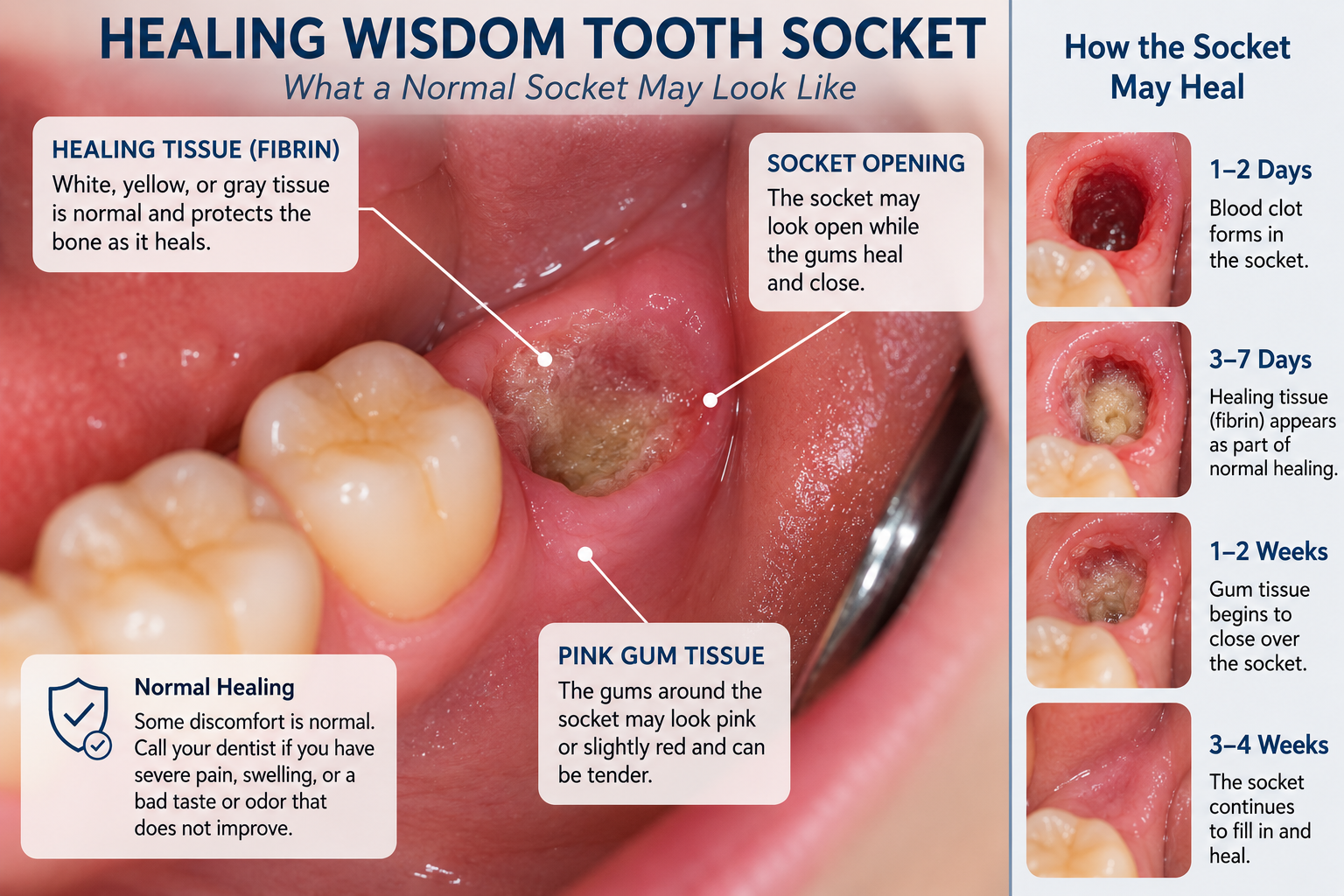
AI-generated illustration of a healing wisdom tooth extraction socket. Actual healing appearance may vary between patients.

Foods That Can Irritate a Wisdom Tooth Socket

Small, hard, sticky, or crumbly foods are more likely to get caught in a wisdom tooth hole. During early recovery, soft foods are easier to eat and less likely to irritate the socket.

Avoid:

  • Rice
  • Seeds
  • Popcorn
  • Chips
  • Nuts
  • Granola
  • Crusty bread
  • Crunchy snacks
  • Sticky candy
  • Foods with small grains or crumbs

Better options include yogurt, applesauce, mashed potatoes, scrambled eggs, soft pasta, smoothies eaten with a spoon, and blended soups that are not too hot.

When to Contact Your Dentist

Call your dentist if food feels stuck and will not come out with gentle rinsing, or if the area becomes more painful after you try to clean it.

You should also contact your dentist if you notice:

  • Severe or worsening pain
  • Pain spreading to the ear, temple, eye, or neck
  • Bad taste or bad odor that does not improve
  • Pus
  • Increased swelling
  • Fever or chills
  • Heavy bleeding
  • Trouble opening your mouth
  • Trouble swallowing or breathing

These symptoms may point to dry socket, infection, or another healing concern that needs professional care.

Tooth Extraction Follow-Up Care at Clearwater Dentistry

Healing after a tooth extraction is easier when you know what to expect and how to care for the area properly. If you had a tooth extracted at Clearwater Dentistry, our team provides detailed aftercare instructions to help support healing and reduce the risk of complications.

If you had your extraction performed at our office and have questions about food trapped in a healing socket, concerns about your recovery, or symptoms that seem unusual, contact us for guidance and follow-up care.

Dentist in Greeley, CO

To book an appointment at our dental office in Greeley, CO, call (970) 515-3550 or visit us at 3110 67th Ave Pl, Greeley, CO 80634.

FAQs

How do you get food out of a wisdom tooth hole?

Use a gentle warm salt water rinse after the first 24 hours. Let the water sit near the socket, tilt your head slowly, and let the water fall out instead of spitting hard.

Is it bad if food gets stuck in a wisdom tooth hole?

Food can occasionally become trapped in a wisdom tooth hole while the extraction site heals. This is a common part of recovery, although the area should be cleaned gently according to your dentist’s instructions.

When can I use a syringe after wisdom teeth removal?

A syringe is typically introduced around day 5 after wisdom tooth removal, once the blood clot has become more stable. Follow your dentist’s or oral surgeon’s instructions, as the recommended timing may vary between patients.

Why does my wisdom tooth hole smell bad?

A bad smell may come from trapped food, healing fluids, or bacteria. If the odor comes with worsening pain, swelling, pus, fever, or a bad taste that does not improve, call your dentist.
What to Do When Food Gets Stuck in a Wisdom Tooth Hole

Reviewed by Dr. Alan Baughman, DMD, MBA

Reading time: four minutes

After wisdom tooth removal, a small opening remains in the extraction site while the area heals. Food can sometimes become trapped in this space, making it important to know how to clean the area without disrupting healing.

Table of Contents

How to Get Food Out of a Wisdom Tooth Hole

After the first 24 hours, a gentle warm salt water rinse is the safest way to remove food from a wisdom tooth hole. The goal is to loosen the food without disturbing the blood clot or irritating the healing socket.

To rinse safely:

  1. Mix 8oz of warm water with a pinch of salt
  2. Take a sip and let the water sit near the extraction area
  3. Tilt your head gently from side to side
  4. Let the water fall out of your mouth instead of spitting hard
  5. Repeat as needed, especially after meals

Do not dig into the socket to remove food. Even if the area feels annoying, poking at it can irritate the tissue, restart bleeding, or dislodge the blood clot.

If you were given a syringe as part of your post-operative instructions, follow the timeline provided by your dentist. Using it too early may irritate the healing socket before the area has had sufficient time to stabilize.

Why Food Gets Trapped While the Socket Heals

After a wisdom tooth is removed, the socket does not close right away. The gum tissue gradually heals over the area, which means a small opening remains for a period of time.

Food may get trapped more easily if:

  • The wisdom tooth was impacted
  • The socket is large or deep
  • You chew near the extraction site
  • You have started eating more textured foods
  • The food is small, sticky, crunchy, or crumbly

Because the socket remains open during healing, it is normal for small food particles to occasionally collect in the area.

What to Avoid When Cleaning the Area

Avoid anything that could break the blood clot, scrape the healing tissue, or push food deeper into the socket. The area may feel like it needs to be cleaned aggressively, but gentle care is safer during recovery.

Do not use:

  • Toothpicks
  • Fingers
  • Tweezers
  • Cotton swabs pushed into the socket
  • Hard brushing directly over the hole
  • Forceful rinsing or spitting
  • A water flosser unless your dentist approves it

If food does not come out with gentle rinsing, leave the area alone and contact your dental office for guidance.

Is It Food or Part of the Healing Process?

Not everything in a wisdom tooth socket is food. As the area heals, you may notice pale, white, yellowish, or slightly gray tissue in the socket. This can be part of normal healing.

Healing tissue may:

  • Stay attached to the socket
  • Look soft or filmy
  • Not rinse away
  • Appear without severe pain or swelling

Food usually feels like a loose particle and may shift or rinse out. If you are unsure, do not scrape the area. Call your dentist if the socket looks unusual or your symptoms are getting worse.

AI-generated illustration of a healing wisdom tooth extraction socket. Actual healing appearance may vary between patients.

Foods That Can Irritate a Wisdom Tooth Socket

Small, hard, sticky, or crumbly foods are more likely to get caught in a wisdom tooth hole. During early recovery, soft foods are easier to eat and less likely to irritate the socket.

Avoid:

  • Rice
  • Seeds
  • Popcorn
  • Chips
  • Nuts
  • Granola
  • Crusty bread
  • Crunchy snacks
  • Sticky candy
  • Foods with small grains or crumbs

Better options include yogurt, applesauce, mashed potatoes, scrambled eggs, soft pasta, smoothies eaten with a spoon, and blended soups that are not too hot.

When to Contact Your Dentist

Call your dentist if food feels stuck and will not come out with gentle rinsing, or if the area becomes more painful after you try to clean it.

You should also contact your dentist if you notice:

  • Severe or worsening pain
  • Pain spreading to the ear, temple, eye, or neck
  • Bad taste or bad odor that does not improve
  • Pus
  • Increased swelling
  • Fever or chills
  • Heavy bleeding
  • Trouble opening your mouth
  • Trouble swallowing or breathing

These symptoms may point to dry socket, infection, or another healing concern that needs professional care.

Tooth Extraction Follow-Up Care at Clearwater Dentistry

Healing after a tooth extraction is easier when you know what to expect and how to care for the area properly. If you had a tooth extracted at Clearwater Dentistry, our team provides detailed aftercare instructions to help support healing and reduce the risk of complications.

If you had your extraction performed at our office and have questions about food trapped in a healing socket, concerns about your recovery, or symptoms that seem unusual, contact us for guidance and follow-up care.

Dentist in Greeley, CO

To book an appointment at our dental office in Greeley, CO, call (970) 515-3550 or visit us at 3110 67th Ave Pl, Greeley, CO 80634.

FAQs

How do you get food out of a wisdom tooth hole?

Use a gentle warm salt water rinse after the first 24 hours. Let the water sit near the socket, tilt your head slowly, and let the water fall out instead of spitting hard.

Is it bad if food gets stuck in a wisdom tooth hole?

Food can occasionally become trapped in a wisdom tooth hole while the extraction site heals. This is a common part of recovery, although the area should be cleaned gently according to your dentist’s instructions.

When can I use a syringe after wisdom teeth removal?

A syringe is typically introduced around day 5 after wisdom tooth removal, once the blood clot has become more stable. Follow your dentist’s or oral surgeon’s instructions, as the recommended timing may vary between patients.

Why does my wisdom tooth hole smell bad?

A bad smell may come from trapped food, healing fluids, or bacteria. If the odor comes with worsening pain, swelling, pus, fever, or a bad taste that does not improve, call your dentist.

Experience the Clearwater Difference

Join our growing community of satisfied patients today! Discover what sets us apart and enjoy our commitment to providing outstanding patient care.

Skip to content